Posted on

Why the Canon EOS R6 V Might Be Canon’s Smartest Camera Yet

Canon R6 V RF 20 50mm F4L 3

Canon’s new EOS R6 V isn’t just another mirrorless camera release. It feels like a direct response to how content is actually being created in 2026. While most camera companies are still trying to balance photography and video equally, Canon has done something surprisingly bold here , it prioritized creators who shoot video first and made compromises unapologetically in favor of that workflow.

The EOS R6 V removes the electronic viewfinder entirely, drops the mechanical shutter, adds active cooling, and introduces a body designed around long-form video production rather than traditional photography ergonomics. On paper, that might sound controversial. In reality, it might be one of the smartest moves Canon has made in years.

For years, hybrid creators have been stuck in an awkward middle ground:

  • mirrorless cameras overheated,
  • cinema cameras were too expensive,
  • and traditional hybrid bodies still leaned heavily toward photographers.

The R6 V changes that conversation completely.

Key Takeaways

  • The Canon EOS R6 V is Canon’s first serious full-frame “video-first” EOS V camera
  • It features a 32.5MP full-frame sensor with 7K RAW and Open Gate recording
  • Canon removed the EVF to improve cooling and creator-focused ergonomics
  • Active cooling allows dramatically longer recording times
  • The R6 V sits somewhere between a traditional mirrorless body and a compact cinema camera
  • This camera signals where the entire hybrid camera industry is heading next

What Is the Canon EOS R6 V?

The Canon EOS R6 V is essentially Canon admitting that the modern creator market has changed.

This isn’t simply an R6 Mark III with extra video features added on top. The entire philosophy behind the camera is different. Canon has positioned the R6 V as a dedicated creator-focused hybrid body aimed at filmmakers, YouTubers, commercial content creators, wedding videographers, and social-first production workflows.

At its core, the camera includes:

  • a 32.5MP full-frame sensor,
  • 7K RAW recording,
  • Open Gate 3:2 capture,
  • internal RAW,
  • Dual Pixel CMOS AF II,
  • and active cooling with an internal fan.

Canon also added:

  • tally lamps,
  • a front record button,
  • vertical shooting support,
  • waveform monitoring,
  • false color tools,
  • and creator-focused video controls.

That combination makes one thing very clear:
this is not a photography camera trying to do video.

This is a video camera disguised as a mirrorless hybrid.

Why Canon Removed the Viewfinder

This is the feature that’s going to divide people immediately.

No EVF.
No traditional photographic shooting experience.

And honestly, that’s probably the point.

Most modern video creators are not spending hours looking through an electronic viewfinder anymore. They’re shooting:

  • on gimbals,
  • on rigs,
  • vertically for social media,
  • externally monitored,
  • or handheld using flip-out displays.

Canon clearly looked at real-world creator workflows and realized the EVF had become wasted space for a large portion of the market.

By removing it, Canon gained:

  • better thermal management,
  • a smaller body,
  • more room for active cooling,
  • improved vertical ergonomics,
  • and a more streamlined creator-focused design.

This follows the same philosophy we’ve seen from cameras like the Sony ZV-E1 and parts of Canon’s own Cinema EOS lineup: optimize for how creators actually shoot, not for how photographers shot a decade ago.

The Real Reason the R6 V Matters

Specs alone are not what make this camera important.

The real reason the R6 V matters is because Canon finally seems to understand where the market is going.

The creator economy has fundamentally changed camera usage.

Today’s hybrid shooters are:

  • filming podcasts,
  • shooting YouTube videos,
  • producing vertical content,
  • running commercial social campaigns,
  • filming weddings,
  • creating documentaries,
  • and delivering across multiple aspect ratios simultaneously.

That’s exactly why Open Gate recording matters so much here.

Being able to shoot full-sensor 3:2 video means creators can crop:

  • horizontal,
  • vertical,
  • cinematic,
  • and social-first formats

from a single recording.

That dramatically speeds up modern content production workflows.

The R6 V also introduces something many creators care about more than megapixels:
reliability.

Active cooling changes everything.

For years, creators accepted overheating warnings as “normal.” Long-form shoots became stressful. Wedding shooters constantly worried about thermal limits. Podcast creators had to babysit recording times.

Canon appears to be directly targeting that frustration.

Canon EOS R6 V vs R6 Mark III

This is where the strategy becomes obvious.

The R6 Mark III is still the traditional hybrid camera.

The R6 V is the creator-first hybrid camera.

FeatureCanon EOS R6 VCanon EOS R6 Mark III
Target UserVideo-first creatorsTraditional hybrid shooters
EVFRemovedIncluded
CoolingActive cooling fanPassive cooling
Open GateYesLimited workflow focus
Vertical Video FeaturesDedicated supportStandard implementation
Mechanical ShutterNoYes
Long Recording SessionsOptimizedMore limited
Tally LampsYesNo
Video Monitoring ToolsExpandedStandard
Price PositioningCreator-focusedTraditional hybrid market

Canon essentially split the R6 lineup into two different user categories:

  • photographers who also shoot video,
  • and video creators who occasionally shoot photos.

That’s honestly a very smart move.

The R6 V Feels More Like a Mini Cinema Camera

What’s interesting is that the R6 V doesn’t really feel like Canon competing against Sony mirrorless cameras anymore.

It feels like Canon compressing parts of its Cinema EOS philosophy into a smaller creator body.

You can see it in:

  • the active cooling,
  • the internal RAW workflows,
  • the monitoring tools,
  • the Open Gate implementation,
  • and the creator ergonomics overall.

Canon is essentially creating a new category:
a compact cinema-hybrid camera.

That category is growing rapidly because modern productions no longer require massive crews or traditional cinema rigs to produce professional content.

A single creator with:

  • a lightweight rig,
  • good audio,
  • reliable autofocus,
  • and strong codecs

can now produce work that previously required far larger setups.

The R6 V is built exactly for that reality.

Who Should Actually Buy the Canon EOS R6 V?

YouTubers and Content Creators

This is probably the ideal audience.

The camera is clearly optimized for:

  • talking head content,
  • studio setups,
  • streaming,
  • handheld creator workflows,
  • and multi-format delivery.

Wedding Videographers

The active cooling alone makes this camera extremely attractive.

Long-form reliability matters massively in weddings, events, and documentary production.

Commercial Creators

Open Gate, internal RAW, and vertical workflows make this extremely strong for agency and social production environments.

Especially for creators delivering content across:

  • TikTok,
  • Instagram Reels,
  • YouTube Shorts,
  • and traditional horizontal platforms simultaneously.

Filmmakers on Smaller Budgets

The R6 V potentially sits in a very dangerous space for Canon’s own cinema lineup.

Because for many independent filmmakers, this may genuinely be “enough camera.”

Who Should Avoid It?

Traditional photographers.

If your workflow revolves around:

  • EVF shooting,
  • mechanical shutter photography,
  • flash-heavy workflows,
  • or sports photography,

the R6 Mark III still makes far more sense.

The R6 V is unapologetically creator-focused.

Is the Canon EOS R6 V the Future of Mirrorless Cameras?

Possibly.

What Canon has done here feels bigger than a single camera launch.

The EOS R6 V feels like a test for where hybrid cameras are heading next:

  • smaller,
  • video-first,
  • creator-centric,
  • thermally optimized,
  • and built around modern content workflows instead of traditional photography assumptions.

The reality is that most younger creators entering the industry today are not identifying themselves as photographers first anymore.

They are:

  • creators,
  • filmmakers,
  • social producers,
  • YouTubers,
  • streamers,
  • and multi-platform storytellers.

The R6 V feels designed for that generation specifically.

And honestly, Canon may have recognized this shift faster than people expected.

Frequently Asked Questions

Does the Canon EOS R6 V shoot Open Gate?

Yes. The R6 V supports 3:2 Open Gate recording using the full sensor area.

Why does the Canon EOS R6 V not have a viewfinder?

Canon removed the EVF to improve cooling, reduce body size, and optimize the camera for creator-focused video workflows.

Can the Canon EOS R6 V overheat?

The camera includes active cooling with an internal fan specifically designed to improve long-form recording performance.

Is the Canon EOS R6 V good for photography?

Yes, but it is clearly designed primarily for video creators rather than traditional photographers.

Does the Canon EOS R6 V shoot internal RAW?

Yes. The camera supports internal 7K RAW recording.

Is the Canon EOS R6 V better than the Sony ZV-E1?

They target similar creator audiences, but the R6 V offers more advanced professional recording formats and higher-end production workflows.

Final Thoughts

The Canon EOS R6 V is probably going to frustrate traditional photographers.

But that’s exactly why it’s interesting.

Instead of trying to satisfy everyone equally, Canon made a very deliberate decision:
build a camera for the way modern creators actually work.

And in doing so, Canon may have accidentally created one of the most important hybrid cameras of the year.

Posted on

Nikon Announces Development of the NIKKOR Z 120-300mm f/2.8 TC VR S: A New Professional Standard

Nikon Z 120-300mm

Nikon has sent a shockwave through the photography world today, May 7, 2026, with the official development announcement of the NIKKOR Z 120-300mm f/2.8 TC VR S. This highly anticipated lens is set to become a cornerstone of the Z-mount ecosystem, bridging the gap between standard telephoto zooms and long primes while introducing professional-grade versatility that was previously the domain of the F-mount’s legendary “swan song” DSLR optics.

The Ultimate Hybrid Telephoto

The NIKKOR Z 120-300mm f/2.8 TC VR S is more than just a zoom lens; it is a dual-purpose tool designed for the rigors of high-stakes sports, news, and wildlife photography. By maintaining a constant f/2.8 maximum aperture throughout its native 120-300mm range, Nikon provides photographers with the light-gathering power and shallow depth-of-field required for isolating subjects in dimly lit arenas or during the golden hour in the field.

However, the “TC” in its name is the real game-changer. Following the design philosophy of the Z 400mm and 600mm TC primes, this lens features a built-in 1.4× teleconverter. With the simple flick of a physical switch, photographers can instantly extend their reach to 168-420mm at f/4. This eliminates the need to swap lenses or fumble with external converters in dusty or fast-paced environments, ensuring that the “decisive moment” is never missed.

S-Line Heritage and Performance

As a member of the prestigious S-Line, the 120-300mm f/2.8 TC VR S is built to Nikon’s most exacting standards. While full specifications are still under wraps, the development announcement confirms that the lens will prioritize “superior optical performance and mobility.”

Key features observed from the initial product renderings and press details include:

  • Vibration Reduction (VR): Essential for a lens of this focal length, the VR system will likely integrate seamlessly with the in-body image stabilization (IBIS) of the Nikon Z8 and Z9.
  • Professional Controls: The lens barrel appears to feature an A/M switch, L-Fn (Lens Function) buttons for custom assignments, and a dedicated drop-in filter slot—a hallmark of Nikon’s high-end super-telephoto glass.
  • Advanced Weather Sealing: Given its target audience, we can expect robust dust and drip resistance for all-weather reliability.
Nikon Nikkor Z 120–420mm

Market Impact: Challenging the Status Quo

This lens arrives as a direct successor to the AF-S NIKKOR 120-300mm f/2.8E FL ED SR VR, which was the final masterpiece of the F-mount era. Transitioning this specific focal range to the Z-mount allows Nikon to leverage the shorter flange distance and wider mount diameter for even sharper corner-to-corner resolution and faster autofocus tracking.

The 120-300mm range is particularly valuable for field sports like football or soccer, where a 70-200mm often feels too short and a 400mm prime can be too restrictive. By offering a 120-420mm range in a single unit, Nikon is effectively providing a “two-in-one” solution that could replace multiple lenses in a professional’s kit.

Availability and What’s Next

While Nikon has not yet confirmed a specific release date or price, historical development cycles suggest we could see a full launch within the next several months. Given that its predecessor retailed for nearly $9,500 and the Z 400mm f/2.8 TC VR S sits around $14,000, this lens will undoubtedly be a significant investment for professionals.

For Z-series shooters, the announcement is a clear signal: Nikon is committed to dominating the professional sports and wildlife market. Whether you are capturing a sprint to the finish line or a rare moment in the wild, the NIKKOR Z 120-300mm f/2.8 TC VR S is shaping up to be the most versatile telephoto zoom ever made.

View More Nikon Products Here

Posted on

Meet Canon’s New Full-Frame Cine Zoom Lenses

blogCanonCineLensescover

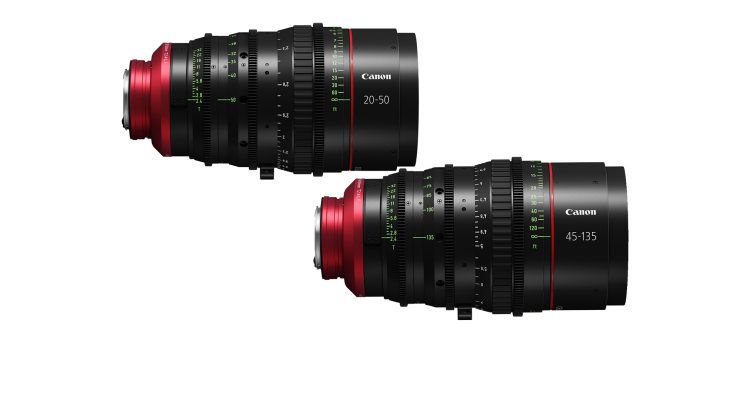
Canon has launched its first full-frame cinema zoom lenses: the CN-E20-50mm T.2.4 L F/FP and CN-E45-135mm T2.4 L F/FP. Both lenses feature dedicated focus, zoom, and iris rings with industry-standard 0.8mm pitch gears. In addition, the gears are located at the same position on both lenses, so you can switch between both in seconds. The focus throw is 300 degrees on both lenses, with luminous markings engraved for easy operation in low-light environments. According to the company, “the two cine-zoom lenses inherit the same subtle, warm colour tone synonymous with Canon’s full range of Cinema lenses.”

CanonCN E20 50mmT24LFFP Featured 1300x750 1

Available in EF and PL mount and designed for use on full frame 35mm and Super35mm cameras, they include Lens Metadata Support such as Cooke /i Technology™ and Zeiss eXtended Data™ protocols.

The new large-aperture lenses feature high-level optical design and performance while sticking with the style and ease of use of Canon’s EF Cinema lens series. With these two zoom lenses — featuring focal length ranges of 20-50mm for wide-angle and 45-135mm for telephoto — you can now cover the same range as its six existing prime lenses, going from 20mm to 135mm, which should cover most of your needs. Both lenses maintain a fast, constant T2.4 aperture across the entire zoom ranges, allowing for image capture in both natural light and darker environments. The lenses also have very similar dimensions and weight.

Both lenses feature 11 iris blades diaphragm and have a 114mm front diameter for clip-on matteboxes. Minimum focusing distance of the 20-50mm is 2″/60cm, while the 45-135mm is 3.3″/1m.

Lens Features from Canon official:

Designed for full frame cinema cameras

Capture increased cinematic quality, wider field-of- view, and greater depth-of-field. This compact and lightweight lens is designed for use on full frame 35mm sensor cameras.

Cinematic look with 4K optical quality

The lens produces superb colour rendition and detail, with sharp images from the centre to the outer edges, perfect for 4K HDR capture. 11 aperture blades create soft beautiful light rays and stunning depth of field falloff, whilst an internal focusing system delivers minimised focus breathing and excellent parfocal performance. The lenses render the beautiful and warm colour tones synonymous with Canon’s cinema lens family.

Constant T2.4 and broad focal length coverage

With a consistent light transmission of T2.4 throughout the zoom range, the Flex Zoom series offers a broad focal range from the wide-angle CN-E20-50mm T2.4 L F / FP, to the mid-focal range of the CN-E45-135mm T2.4 L F / FP. These lenses are the ideal pairing to cover a wide range of shooting situations.

Advanced Lens Metadata Support

The Flex Zoom series are compliant with a wide range of communication standards thanks to the versatile lens-to-camera communication function, including Cooke /i Technology™, and ZEISS eXtended Data™ (PL mount) and EF mount. This will enable to display or record lens meta data as well as utilize camera functions such as aberration correction, peripheral illumination correction and focus guide function with compatible cameras. External 4-pin Lemo communication provides metadata support for cameras not compliant with the above protocols.

Robust design and useful handling features

Both the CN-E20-50MM T2.4 L F / FP and CN-E45- 135MM T2.4 L F / FP share the same design with consistent front diameter, gear positions and gear rotation angles. Focus, zoom, and iris dials feature industry standard gears and 0.8mm pitch to suit third party follow focus accessories. The lens features luminous (glow in the dark) metric and imperial markings for easy operation in low light. Built for longevity, the premium design and outstanding optics and components, offer quick and precise operation, with durability ideal for professional video productions.

Posted on

Canon Announces the Development of its EOS R3 Pro Mirrorless Camera

blogCanonR3cover

The Canon EOS R3 has just been announced by the camera giant – While details are limited, the camera will clearly be positioned above the EOS R5. Cross this with build quality and speed of the EOS 1D X Mark III, and it’s looking like this will be Canon’s most powerful full -frame stills camera for sports and news photographers.

Canon boasts that the EOS R3 features a new BSI stacked CMOS sensor, a powerful DIGIC X imaging processor, shooting capabilities of 30fps with AF/AE tracking, eye, head and body detection and a pioneering new autofocus Eye Control Function. It is the ideal camera for action photographers looking for quality images, both still and moving, of objects travelling at intense speeds.

The R3 is promised to be an “outstanding complement” to the two super-telephoto lenses also announced for the RF mount: the RF400mm f/2.8 L IS USM and RF600mm f/4 L IS USM, and that it will place great emphasis on “superb autofocus performance and speed, with fast-moving subjects.”

With pin-sharp accurate tracking and focus on fast-moving action, the EOS R3’s next generation Dual Pixel CMOS AF can track subjects’ eyes, heads and bodies travelling at speed – excellent for capturing even the finest of details in a split second. What’s more, Canon reveals it will add a new subject (yet to be disclosed) to the camera’s AF tracking.

One exciting new feature is the ground-breaking Eye Control Function, which enables users to simply select and move the AF point using their eye via the viewfinder. This instinctive feature offers professionals natural and speedy control over AF. Reducing the time to focus, which is usually done with a multi-controller/button.

The EOS R3’s build is Inspired by the EOS-1D series, allowing for ultra-intuitive control in the most demanding professional situations. Professionals will have the confidence to keep on shooting – whatever the conditions – whether they are pitch side or poolside, inside or outside, in snow or sunshine.

Initial EOS R3 key features:

·       New Canon-developed stacked BSI CMOS sensor

·       30fps with AF/AE tracking

·       Eye Control Function

·       Subject eye and head detection

·       Dual Pixel CMOS AF

·       1D series weather resistance

New lenses also announced:

The RF 100mm F2.8L MACRO IS USM – an impressive macro and portraiture lens which is the world’s first AF macro lens with 1.4x close-up magnification. In addition to this Canon also revealed details of a the new RF 400mm F2.8L IS USM and RF 600mm F4L IS USM, two telephoto prime lenses designed to meet the demands for sports and wildlife professionals, with incredible focal lengths and capabilities, especially when paired with EOS R3.