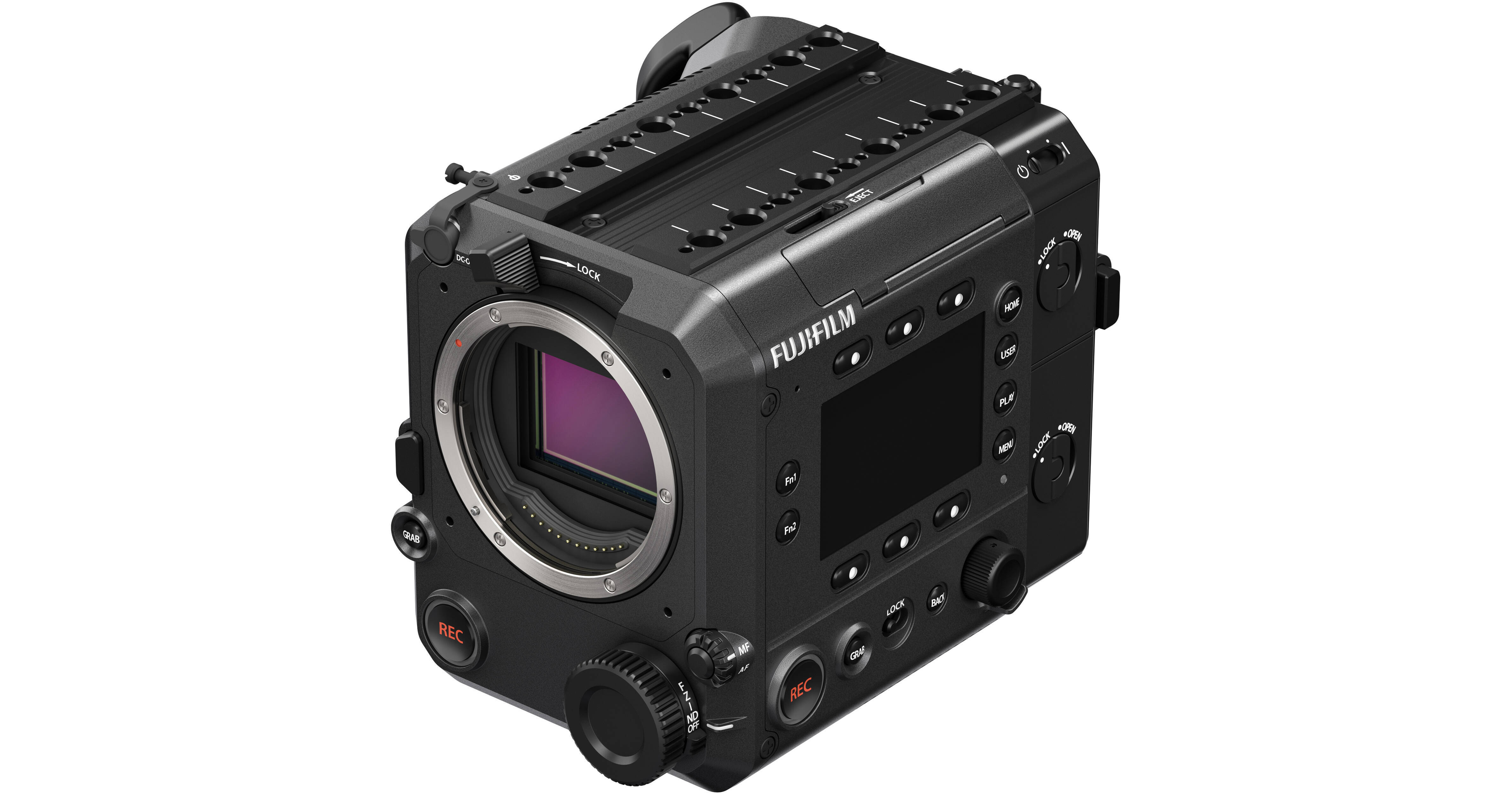
Canon’s new EOS R6 V isn’t just another mirrorless camera release. It feels like a direct response to how content is actually being created in 2026. While most camera companies are still trying to balance photography and video equally, Canon has done something surprisingly bold here , it prioritized creators who shoot video first and made compromises unapologetically in favor of that workflow.
The EOS R6 V removes the electronic viewfinder entirely, drops the mechanical shutter, adds active cooling, and introduces a body designed around long-form video production rather than traditional photography ergonomics. On paper, that might sound controversial. In reality, it might be one of the smartest moves Canon has made in years.
For years, hybrid creators have been stuck in an awkward middle ground:
- mirrorless cameras overheated,
- cinema cameras were too expensive,
- and traditional hybrid bodies still leaned heavily toward photographers.
The R6 V changes that conversation completely.
Key Takeaways
- The Canon EOS R6 V is Canon’s first serious full-frame “video-first” EOS V camera
- It features a 32.5MP full-frame sensor with 7K RAW and Open Gate recording
- Canon removed the EVF to improve cooling and creator-focused ergonomics
- Active cooling allows dramatically longer recording times
- The R6 V sits somewhere between a traditional mirrorless body and a compact cinema camera
- This camera signals where the entire hybrid camera industry is heading next
What Is the Canon EOS R6 V?
The Canon EOS R6 V is essentially Canon admitting that the modern creator market has changed.
This isn’t simply an R6 Mark III with extra video features added on top. The entire philosophy behind the camera is different. Canon has positioned the R6 V as a dedicated creator-focused hybrid body aimed at filmmakers, YouTubers, commercial content creators, wedding videographers, and social-first production workflows.
At its core, the camera includes:
- a 32.5MP full-frame sensor,
- 7K RAW recording,
- Open Gate 3:2 capture,
- internal RAW,
- Dual Pixel CMOS AF II,
- and active cooling with an internal fan.
Canon also added:
- tally lamps,
- a front record button,
- vertical shooting support,
- waveform monitoring,
- false color tools,
- and creator-focused video controls.
That combination makes one thing very clear:
this is not a photography camera trying to do video.
This is a video camera disguised as a mirrorless hybrid.
Why Canon Removed the Viewfinder
This is the feature that’s going to divide people immediately.
No EVF.
No traditional photographic shooting experience.
And honestly, that’s probably the point.
Most modern video creators are not spending hours looking through an electronic viewfinder anymore. They’re shooting:
- on gimbals,
- on rigs,
- vertically for social media,
- externally monitored,
- or handheld using flip-out displays.
Canon clearly looked at real-world creator workflows and realized the EVF had become wasted space for a large portion of the market.
By removing it, Canon gained:
- better thermal management,
- a smaller body,
- more room for active cooling,
- improved vertical ergonomics,
- and a more streamlined creator-focused design.
This follows the same philosophy we’ve seen from cameras like the Sony ZV-E1 and parts of Canon’s own Cinema EOS lineup: optimize for how creators actually shoot, not for how photographers shot a decade ago.
The Real Reason the R6 V Matters
Specs alone are not what make this camera important.
The real reason the R6 V matters is because Canon finally seems to understand where the market is going.
The creator economy has fundamentally changed camera usage.
Today’s hybrid shooters are:
- filming podcasts,
- shooting YouTube videos,
- producing vertical content,
- running commercial social campaigns,
- filming weddings,
- creating documentaries,
- and delivering across multiple aspect ratios simultaneously.
That’s exactly why Open Gate recording matters so much here.
Being able to shoot full-sensor 3:2 video means creators can crop:
- horizontal,
- vertical,
- cinematic,
- and social-first formats
from a single recording.
That dramatically speeds up modern content production workflows.
The R6 V also introduces something many creators care about more than megapixels:
reliability.
Active cooling changes everything.
For years, creators accepted overheating warnings as “normal.” Long-form shoots became stressful. Wedding shooters constantly worried about thermal limits. Podcast creators had to babysit recording times.
Canon appears to be directly targeting that frustration.
Canon EOS R6 V vs R6 Mark III
This is where the strategy becomes obvious.
The R6 Mark III is still the traditional hybrid camera.
The R6 V is the creator-first hybrid camera.
| Feature | Canon EOS R6 V | Canon EOS R6 Mark III |
|---|---|---|
| Target User | Video-first creators | Traditional hybrid shooters |
| EVF | Removed | Included |
| Cooling | Active cooling fan | Passive cooling |
| Open Gate | Yes | Limited workflow focus |
| Vertical Video Features | Dedicated support | Standard implementation |
| Mechanical Shutter | No | Yes |
| Long Recording Sessions | Optimized | More limited |
| Tally Lamps | Yes | No |
| Video Monitoring Tools | Expanded | Standard |
| Price Positioning | Creator-focused | Traditional hybrid market |
Canon essentially split the R6 lineup into two different user categories:
- photographers who also shoot video,
- and video creators who occasionally shoot photos.
That’s honestly a very smart move.
The R6 V Feels More Like a Mini Cinema Camera
What’s interesting is that the R6 V doesn’t really feel like Canon competing against Sony mirrorless cameras anymore.
It feels like Canon compressing parts of its Cinema EOS philosophy into a smaller creator body.
You can see it in:
- the active cooling,
- the internal RAW workflows,
- the monitoring tools,
- the Open Gate implementation,
- and the creator ergonomics overall.
Canon is essentially creating a new category:
a compact cinema-hybrid camera.
That category is growing rapidly because modern productions no longer require massive crews or traditional cinema rigs to produce professional content.
A single creator with:
- a lightweight rig,
- good audio,
- reliable autofocus,
- and strong codecs
can now produce work that previously required far larger setups.
The R6 V is built exactly for that reality.
Who Should Actually Buy the Canon EOS R6 V?
YouTubers and Content Creators
This is probably the ideal audience.
The camera is clearly optimized for:
- talking head content,
- studio setups,
- streaming,
- handheld creator workflows,
- and multi-format delivery.
Wedding Videographers
The active cooling alone makes this camera extremely attractive.
Long-form reliability matters massively in weddings, events, and documentary production.
Commercial Creators
Open Gate, internal RAW, and vertical workflows make this extremely strong for agency and social production environments.
Especially for creators delivering content across:
- TikTok,
- Instagram Reels,
- YouTube Shorts,
- and traditional horizontal platforms simultaneously.
Filmmakers on Smaller Budgets
The R6 V potentially sits in a very dangerous space for Canon’s own cinema lineup.
Because for many independent filmmakers, this may genuinely be “enough camera.”
Who Should Avoid It?
Traditional photographers.
If your workflow revolves around:
- EVF shooting,
- mechanical shutter photography,
- flash-heavy workflows,
- or sports photography,
the R6 Mark III still makes far more sense.
The R6 V is unapologetically creator-focused.
Is the Canon EOS R6 V the Future of Mirrorless Cameras?
Possibly.
What Canon has done here feels bigger than a single camera launch.
The EOS R6 V feels like a test for where hybrid cameras are heading next:
- smaller,
- video-first,
- creator-centric,
- thermally optimized,
- and built around modern content workflows instead of traditional photography assumptions.
The reality is that most younger creators entering the industry today are not identifying themselves as photographers first anymore.
They are:
- creators,
- filmmakers,
- social producers,
- YouTubers,
- streamers,
- and multi-platform storytellers.
The R6 V feels designed for that generation specifically.
And honestly, Canon may have recognized this shift faster than people expected.
Frequently Asked Questions
Does the Canon EOS R6 V shoot Open Gate?
Yes. The R6 V supports 3:2 Open Gate recording using the full sensor area.
Why does the Canon EOS R6 V not have a viewfinder?
Canon removed the EVF to improve cooling, reduce body size, and optimize the camera for creator-focused video workflows.
Can the Canon EOS R6 V overheat?
The camera includes active cooling with an internal fan specifically designed to improve long-form recording performance.
Is the Canon EOS R6 V good for photography?
Yes, but it is clearly designed primarily for video creators rather than traditional photographers.
Does the Canon EOS R6 V shoot internal RAW?
Yes. The camera supports internal 7K RAW recording.
Is the Canon EOS R6 V better than the Sony ZV-E1?
They target similar creator audiences, but the R6 V offers more advanced professional recording formats and higher-end production workflows.
Final Thoughts
The Canon EOS R6 V is probably going to frustrate traditional photographers.
But that’s exactly why it’s interesting.
Instead of trying to satisfy everyone equally, Canon made a very deliberate decision:
build a camera for the way modern creators actually work.
And in doing so, Canon may have accidentally created one of the most important hybrid cameras of the year.